
INVASION
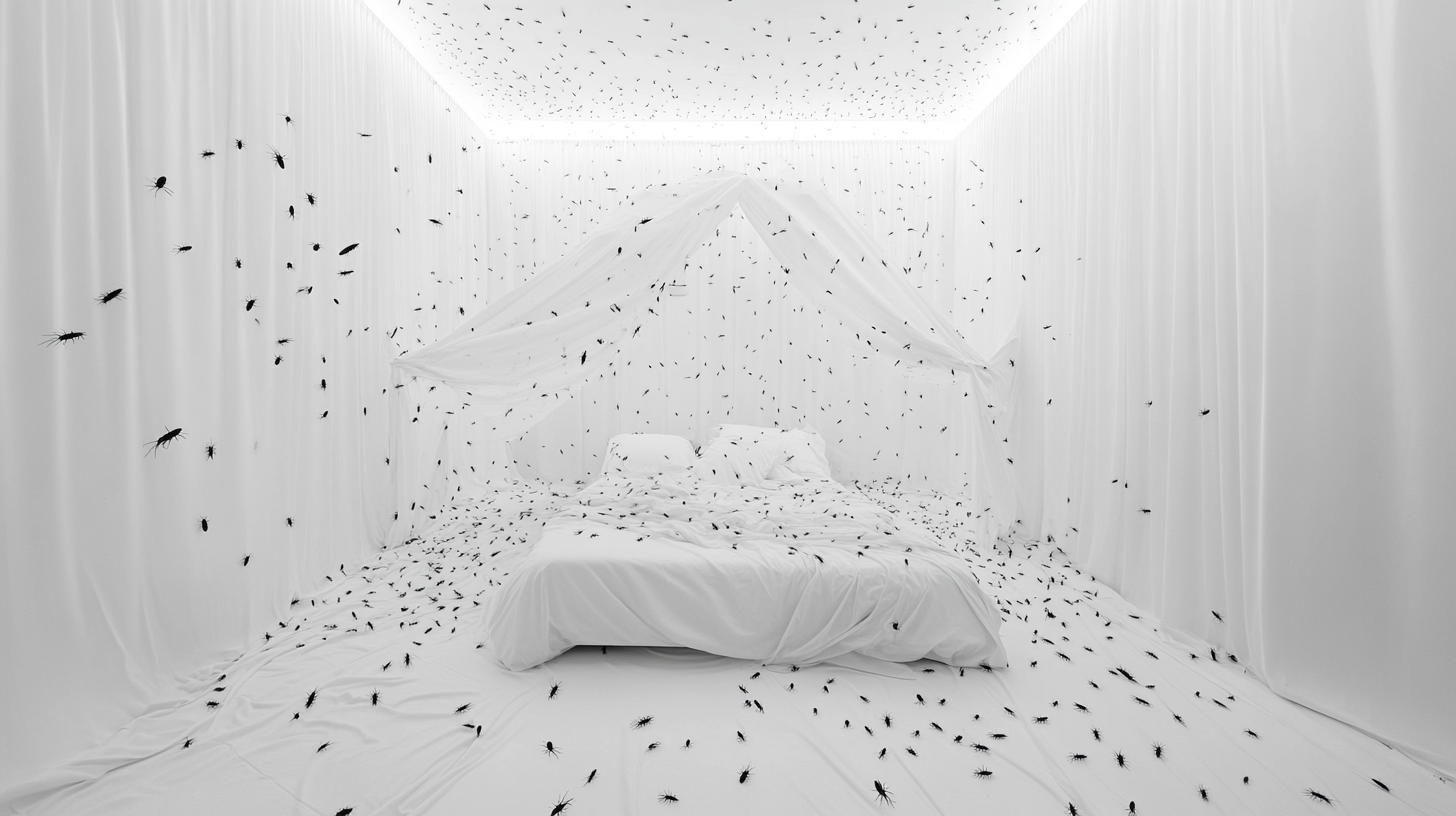
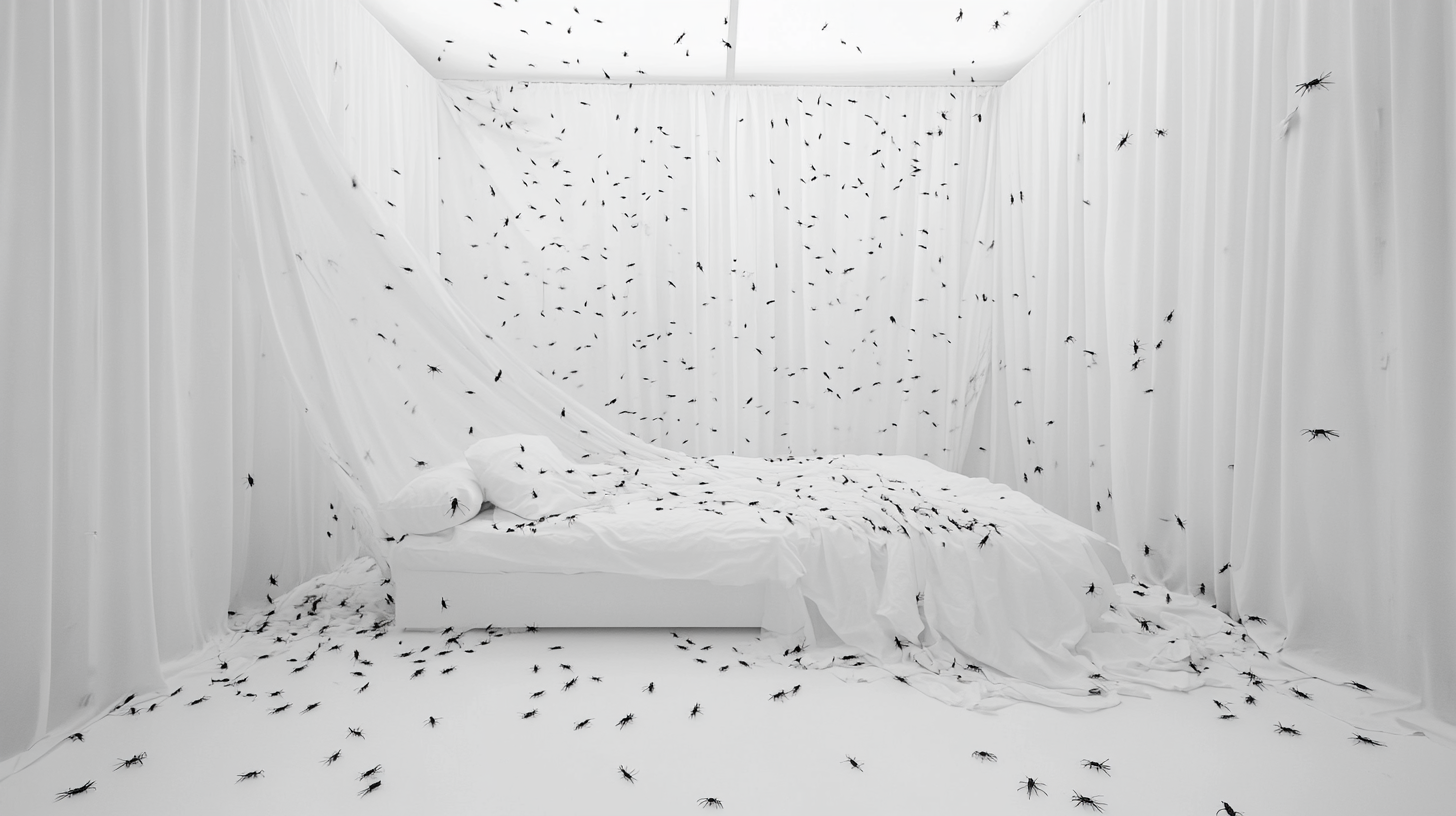
Invasion explores human vulnerability through a white bedroom overrun by black insects sewn into the walls. The purity of the space is disrupted by the uncontrollable presence of these small beings, symbols of thoughts and emotions that invade us. The room represents intimacy and solitude, but also inner conflict and the inability to control the unpredictable. A space for reflecting on the psychological and physical invasion.


-
Invasion
A raw, unsettling, and inevitable name. It doesn’t ask permission—it enters, expands, transforms. It evokes a brutal occupation of intimate space and the mind, where refuge becomes siege and silence fills with presence. Invasion is not just change—it’s rupture, a breaking of boundaries between inside and outside, between what we control and what consumes us. It is trauma made visible, the psyche in revolt, the body overtaken by the intangible. A name that disturbs, because it tells the truth: nothing is ever truly safe. -
Invasion is vulnerability made space. A white bedroom, symbolizing purity, is overtaken by black insects that alter its tranquility, physically and symbolically invading the space. The insects, small and numerous, serve as a metaphor for loss of control: fragments of thoughts and emotions accumulating and transforming into an unstoppable assault. The room becomes a battlefield between intimacy and chaos, between refuge and the unpredictable. Every invaded corner explores the interconnectedness between the individual and the outside, between the mind and the natural world. The invasion is the manifestation of the inability to contain the incessant flow of emotions and thoughts.
-
The white room—symbol of purity, intimacy, and refuge—reveals its fragility and isolation as black insects swarm in. They are not just creatures, but chaos incarnate: invasive, uncontrollable, multiplying like fears and intrusive thoughts. Vulnerability becomes visible, as the private space is no longer safe but under siege. This is the clash between the inner self and an overwhelming external world. The sterile perfection of the room fractures, giving way to disorder—a battlefield where emotion, thought, and external forces collide.
-
Architecture becomes invasion. Ishigami lets nature bleed into built space, dissolving the boundary between shelter and wilderness. Ando uses light and void as silent forces, penetrating and redefining space with quiet violence. Hadid explodes form—her architecture moves like a rupture, embodying energy that disorients and overwhelms. Do Ho Suh turns the home into a haunted shell, filled with memory’s persistent occupation. Whiteread sculpts absence itself, exposing the ghost of habitation and making emptiness unbearable. Each project is a trespass, a poetic intrusion—where architecture stops protecting and starts provoking.